
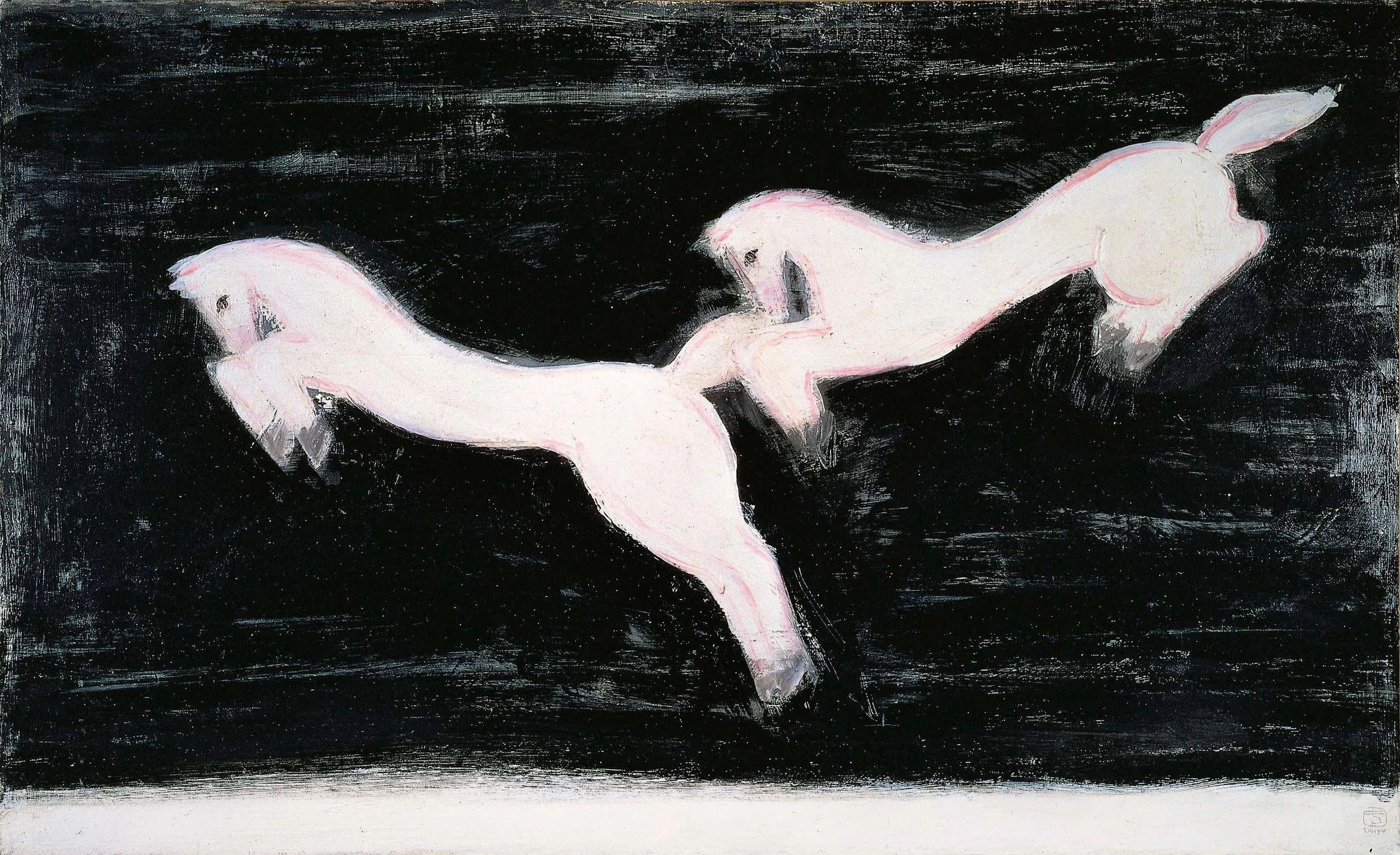
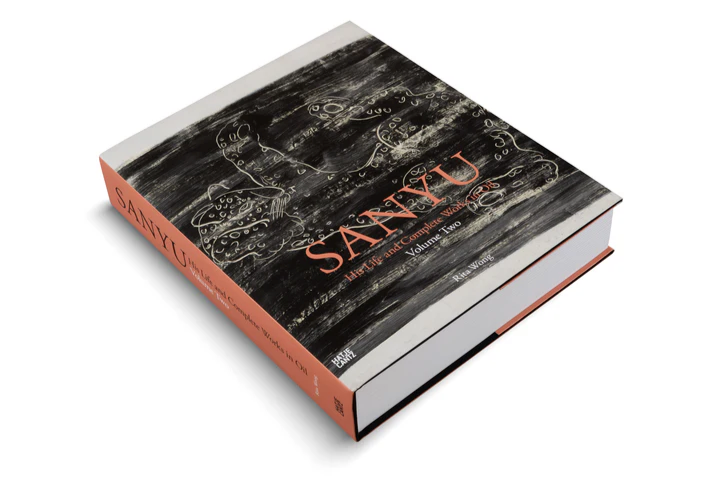
SANYU: His Life and Complete Works in Oil
Volumes One and Two
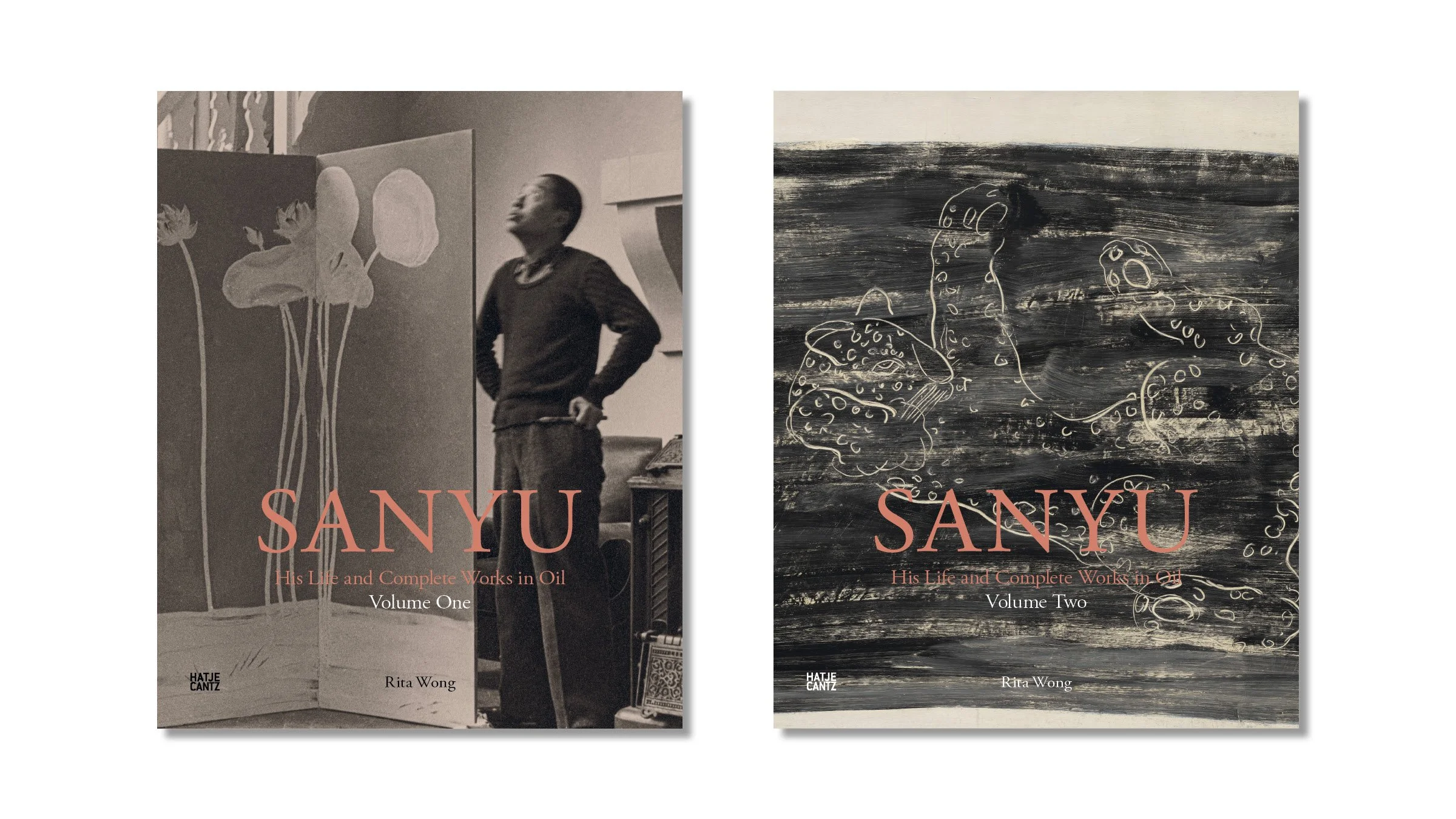
Two volumes. 848 pages. Trilingual—Chinese, French, and English.
The definitive biography and catalogue raisonné of Sanyu’s oil paintings, the result of twenty-five years of research by Rita Wong. I designed the books; Hatje Cantz published them for the Li Ching Foundation in Taipei. The scope mirrors the artist’s life: born in China, formed in Paris, for a long time misunderstood in both.
About Sanyu
In 1921, Sanyu (Chang Yu, 1895–1966) was among a generation of Chinese artists who left their homeland to study abroad. Choosing Paris, he enrolled at the Académie de la Grande Chaumière, where he immersed himself in drawing nudes from live models—an experience entirely new to Chinese art of the period. In these early ink drawings, his training in calligraphy is evident in the curvilinear assurance and fluidity of his line.
By 1929, Sanyu began painting in oils, often in black and white, accented with restrained passages of pink. After World War II, he traveled to New York, where he shared an apartment and a close friendship with Swiss photographer Robert Frank. Through Frank, Sanyu encountered artists of the New York School, particularly Mark Rothko. Although he never embraced pure abstraction, his later paintings absorbed their sense of expansive color and atmospheric field.
Sanyu returned to Paris in 1950 and remained there until his death. He believed he could not grow as an artist elsewhere, though his later years were marked by struggle and isolation. In August 1966, he died of accidental gas asphyxiation in his small studio. His paintings and drawings were subsequently sold in bulk at Hôtel Drouot for a fraction of their worth.
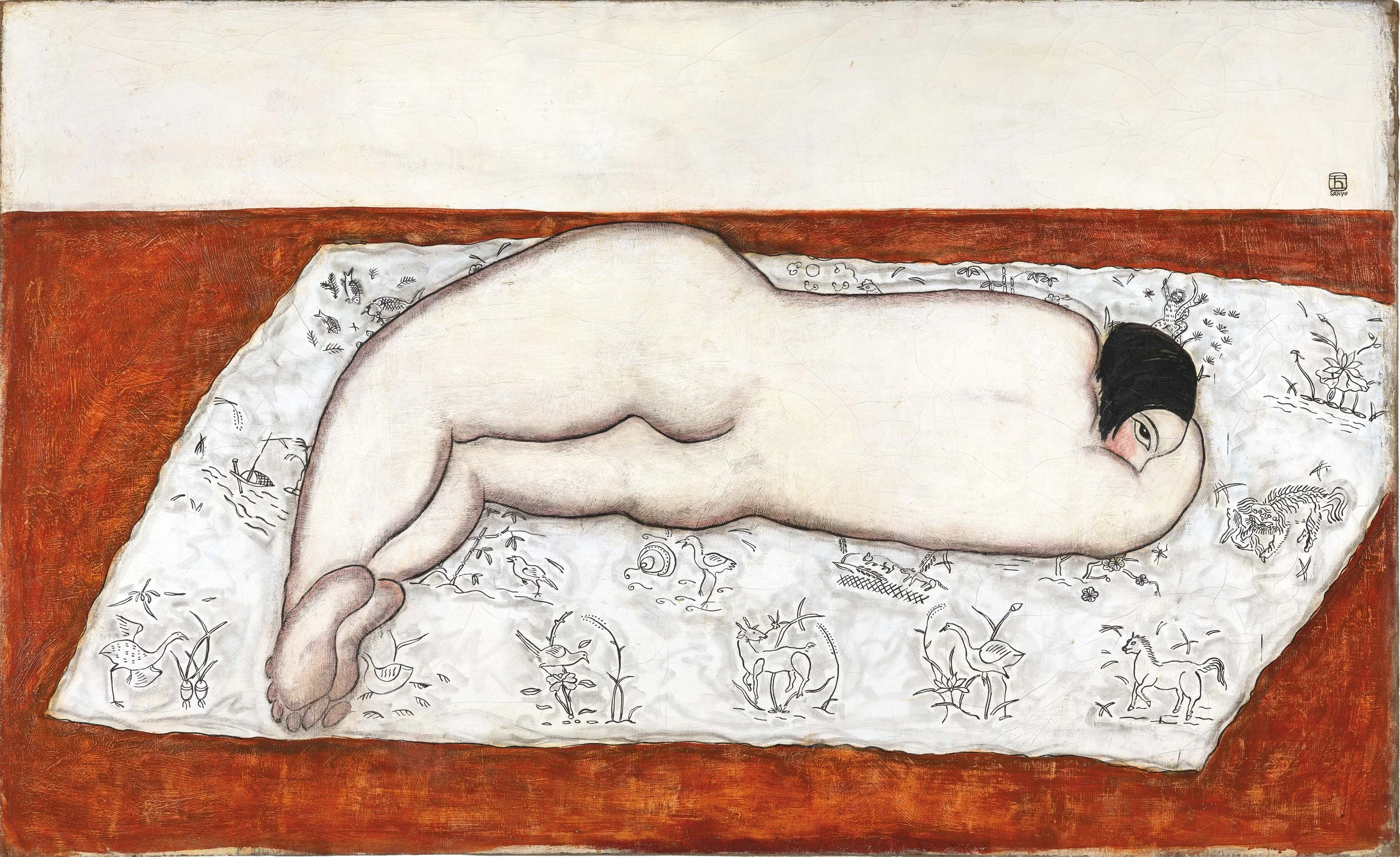
Today, Sanyu is recognized as one of the most significant modern Chinese painters of the twentieth century. His Five Nudes sold for $150,000 in 1993 and resold for $33 million in 2019, marking a dramatic reassessment of his place in modern art. Nude on Tapestry (illustrated above) realized $24 million in November 2023.
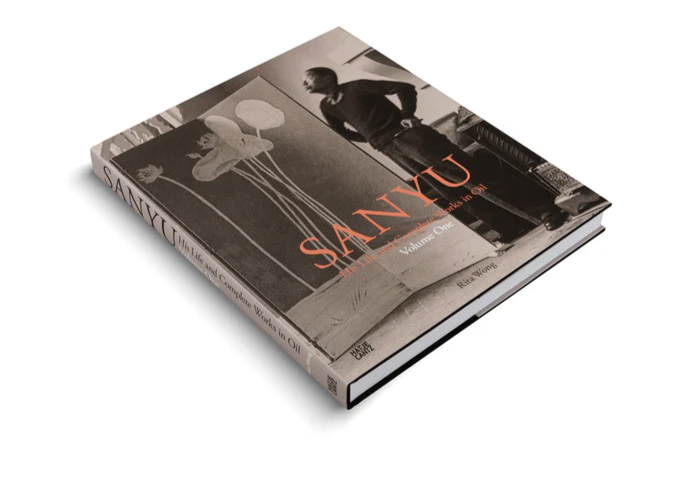
Volume One: His Life
By Rita Wong
Design by Glenn Suokko
Published by Hatje Cantz, Berlin
Printed in Italy
English, Chinese, and French editions
248 pages · 300 illustrations · 33 × 27 cm · Hardcover
Volume One traces Sanyu’s life from his early years in China and Japan to his artistic development in Paris and New York, culminating in his final years in Paris—impoverished yet undaunted. The biography reveals how the polarities and tensions he encountered shaped a pictorial language that merged Western modernism with centuries-old Chinese traditions. Through this synthesis, Sanyu evolved from a Chinese artist of the modern period into a modernist with deep Chinese cultural roots, creating a hybrid vision previously unseen.
Volume Two: Complete Works in Oil
By Rita Wong
Design by Glenn Suokko
Published by Hatje Cantz, Berlin
Printed in Italy
Single edition in English, Chinese, and French
600 pages · 330 illustrations · 33 × 27 cm · Hardcover
Volume Two comprises the catalogue raisonné of the 321 known oil paintings by Sanyu, executed on mirror, canvas, Masonite, board, and paper. A catalogue raisonné is a critical, systematic record of an artist’s work, establishing authenticity through documented provenance, exhibitions, and publications.
In Asia, this empirical approach to art documentation historically stood in tension with collecting traditions that emphasized privacy and discretion. Pedagogical practices based on copying further complicated questions of authorship. As public auctions emerged and the art market expanded, the need for rigorous scholarly catalogues became increasingly urgent.
In 2001, the Li Ching Foundation published Sanyu: Catalogue Raisonné, Oil Paintings—the first catalogue raisonné devoted to a modern Chinese artist. Since then, the foundation has produced five major catalogue raisonnés: three on Sanyu, one on Pan Yu Lin, and one on Ting Yin Yung, positioning it at the forefront of scholarly art publishing in Asia.
This volume was realized through collaboration among collectors, scholars, imaging specialists, photographers, and scientists. It advances the study of Sanyu’s work and ensures the continued dissemination of his artistic legacy.
The Li Ching Foundation and Glenn Suokko
Founded in 1983, the Li Ching Foundation is one of Taiwan’s earliest private foundations dedicated to cultural and educational initiatives. In addition to providing scholarships in Taiwan and China—and through its sister organization, the Taipei American Educational Trust, in the United States—the foundation has funded art, music, and library facilities throughout Shandong Province, the home of its founder, I Fu-En. Since 2005, Li Ching has focused on the creation of online archives and the publication of scholarly catalogue raisonnés devoted to modern Chinese artists.
I have collaborated with the Li Ching Foundation since 2005, working closely with Rita Wong, chairperson of the foundation and author of catalogue raisonnés on Sanyu (1895–1966), Pan Yu Lin (1895–1977), and Ting Yin Yung (1906–1978). Together, we have produced eight catalogue raisonnés—long-term research and design projects integrating scholarship, image archives, typography, and production. Many of these volumes are now out of print and regarded as highly collectible reference works.