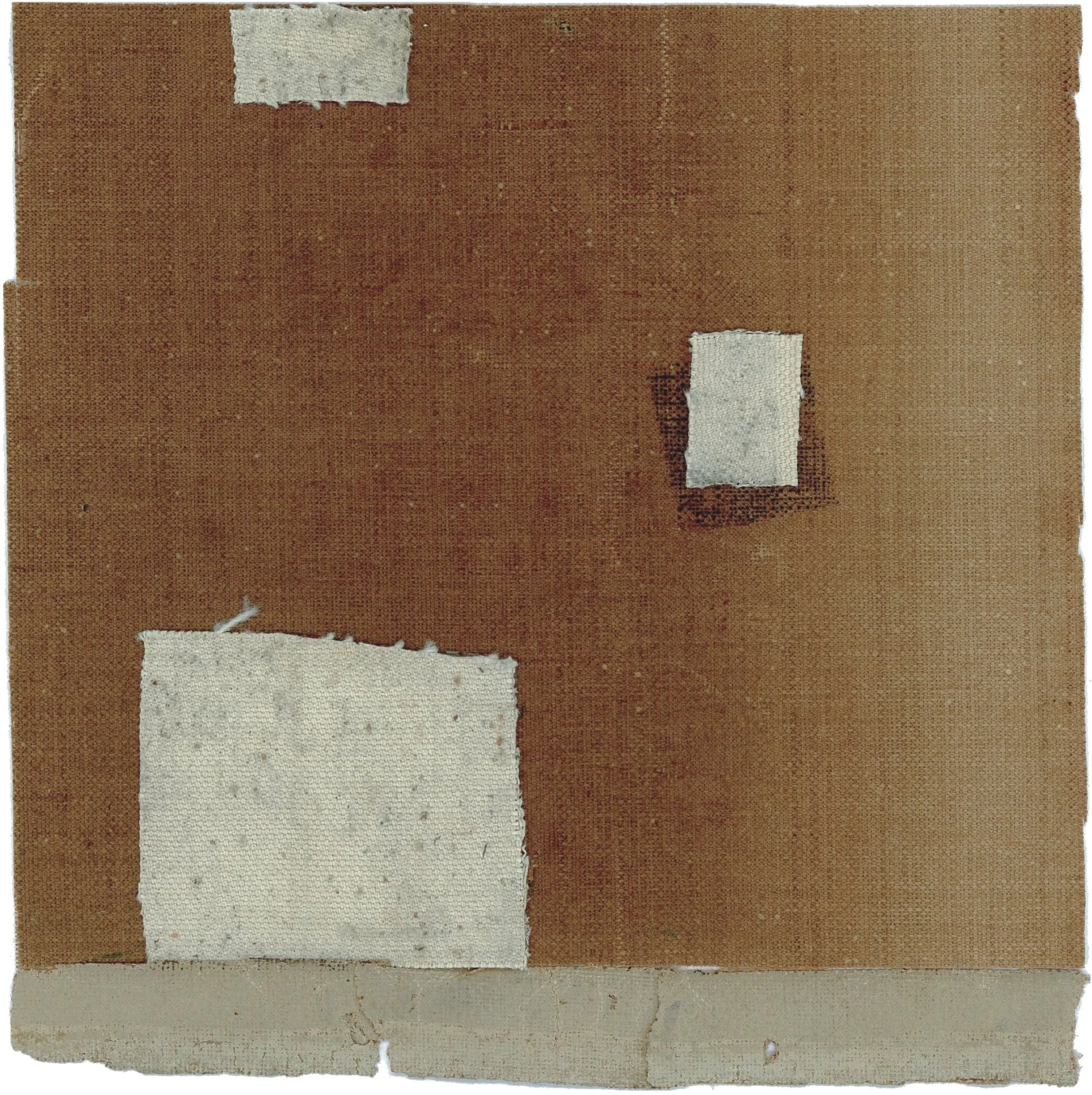
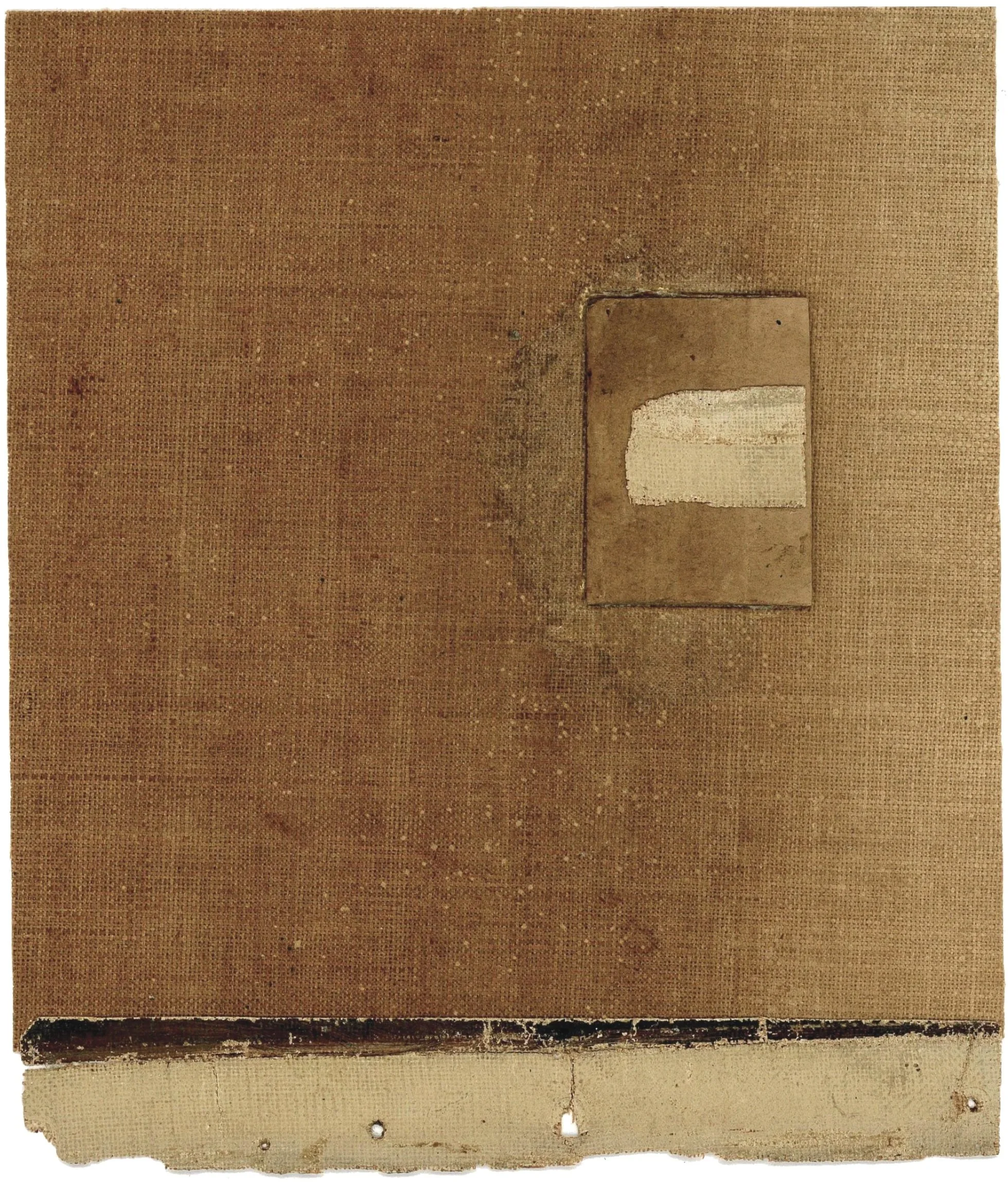
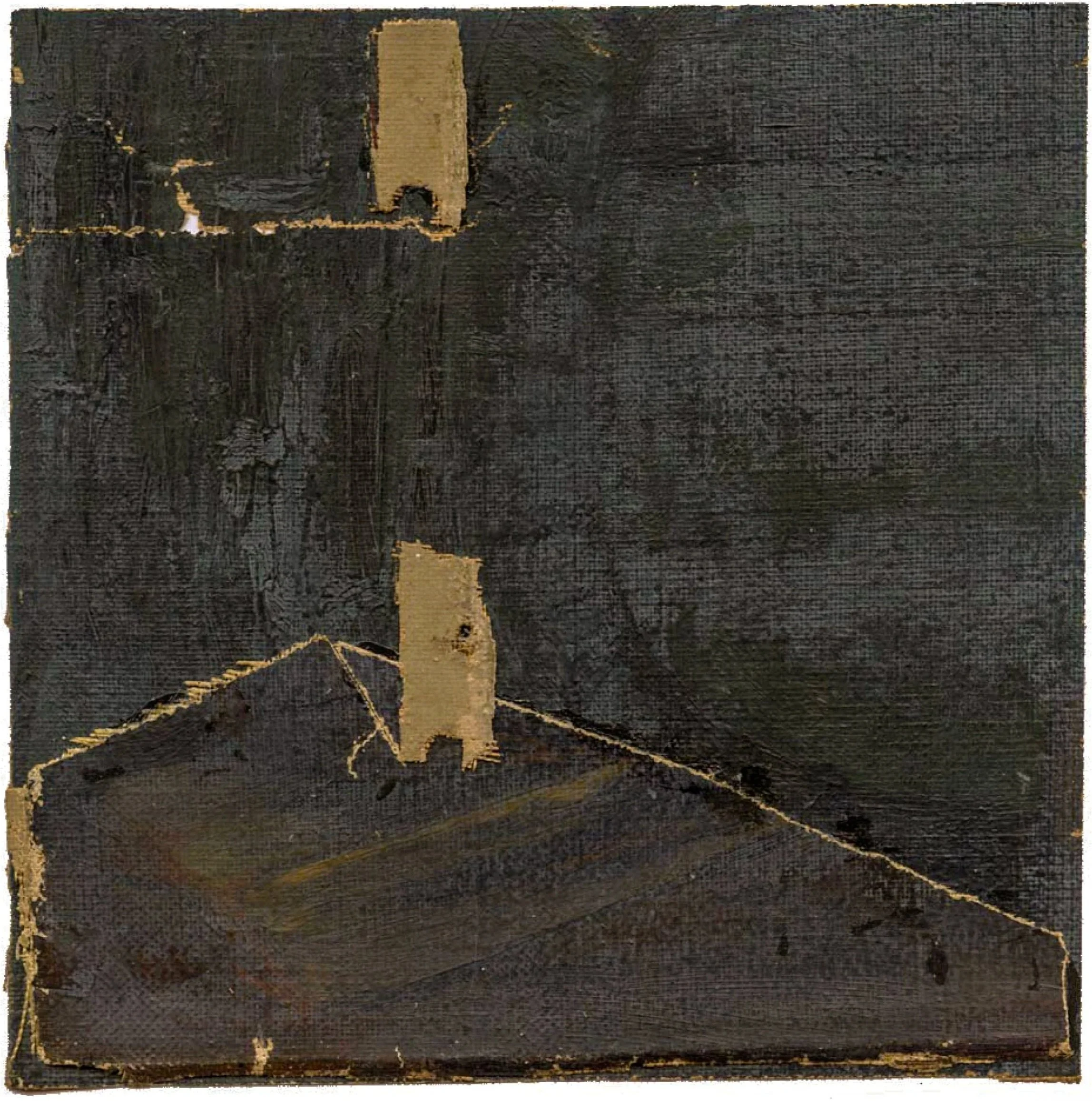
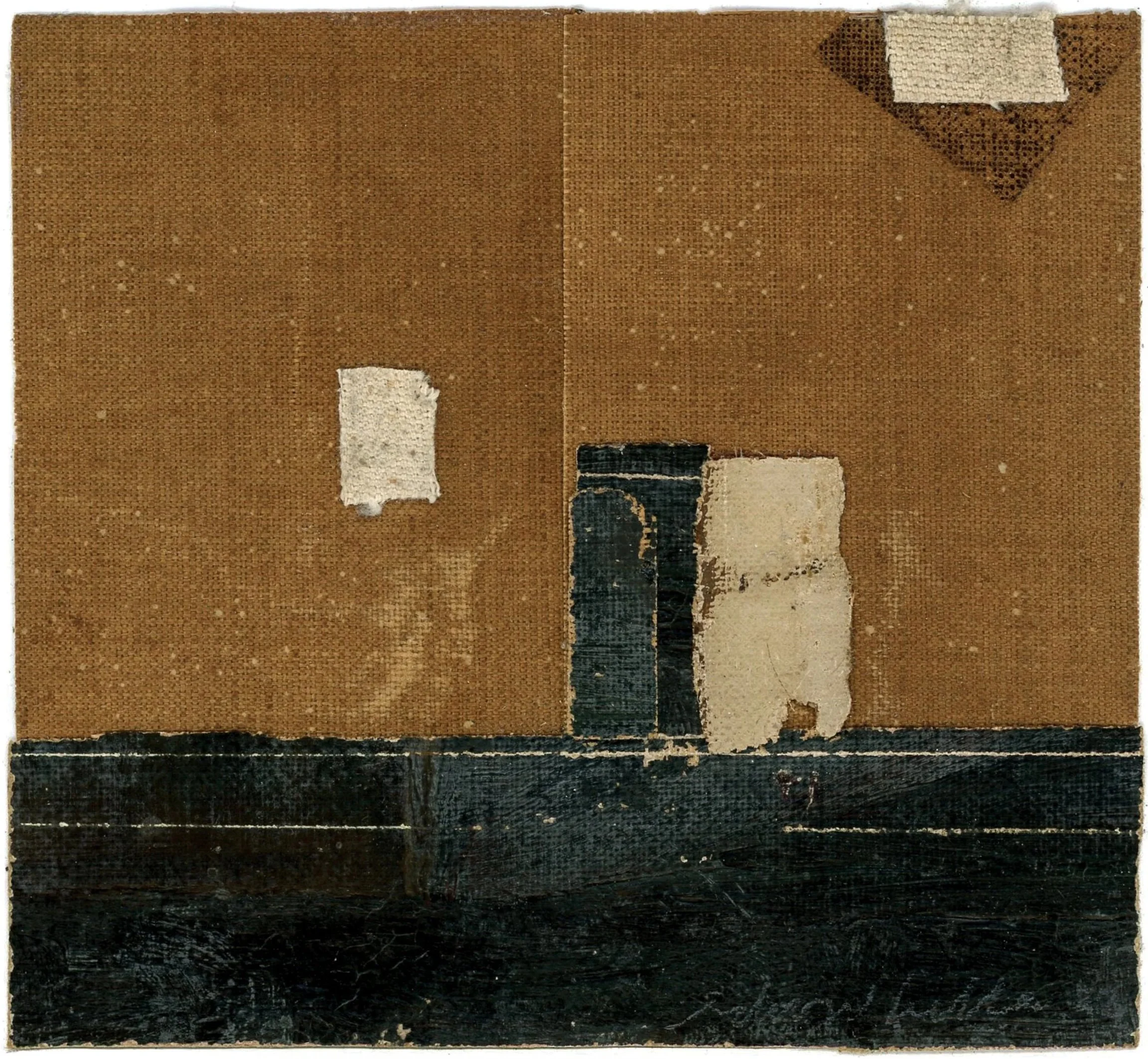
One day in 2022, an unexpected package arrived by mail from an old friend, Ed Fella. We had been graduate students together in the graphic design department at Cranbrook Academy of Art, and in the thirty-some years since, we had met only twice: once in Los Angeles, where he taught at CalArts, and once when he visited me in Vermont. Each year I would receive his New Year’s “card,” an 11 × 17-inch flyer or small booklet of photocopied collages and drawings, signed by hand. This time the package held originals: two collages made from cut pieces of an old canvas. A note explained:
“For many years, I’ve collected so-called ‘Bad Paintings’ from thrift stores and yard sales. I frequently cut them up and make collages and/or rearrangements of them. The two I’m sending you are inspired by you and your gallery aesthetic, hence ‘Glenn’s Vermont.’”
An Outlier
Born in Detroit in 1938, Fella worked for three decades as a commercial artist before reinventing himself at forty-seven as a fine-art-minded designer whose collages, flyers, and hand-lettered posters blur the line between art and design. He calls himself an outlier: not an insider, and not an outsider, but someone who works on the edges of institutions he knows intimately without ever quite belonging to them.
Through the 1960s and ’70s, while making advertising for Detroit clients, he designed posters for the city’s alternative art scene and developed a personal practice on the side: two-sided “flyers” built with photostats, photocopiers, and X-Acto knives, layering photography, collage, drawing, and altered type. The cut-and-paste approach anticipated effects designers would later achieve digitally, and collage has run through his work ever since.
Cranbrook
In 1985, Fella left his commercial career to enroll at Cranbrook, earning his MFA in 1987. That is where I met him. Ed, a generation older, was a class ahead of me, and we overlapped for a year. I was struggling to find my creative voice; Ed had found his and was pushing it further. In the studio he worked tirelessly, cutting, collaging, revising, so his example arrived as demonstration rather than instruction. In critique he would find the one decision in a piece that actually mattered and push you to defend it or abandon it. He gave me permission to trust what I already half-sensed: that the rules I’d been taught weren’t the only way to make meaning. I consider him the greatest teacher I ever had.
A second career followed. He taught at CalArts from 1987 until his retirement in 2013, and the design world caught up with him, with exhibitions at the National Design Museum, the Museum of Modern Art, and the Los Angeles County Museum of Art.
Ed’s Vermont
The first two collages surprised me. Ed usually cuts paper, magazine pages, ticket stubs, printed ephemera; here he had used the plain, patched back of a turn-of-the-century oil painting. As images they read as paintings, made from the material of painting itself. Time and wear had given the canvas a presence that new paint could never match.
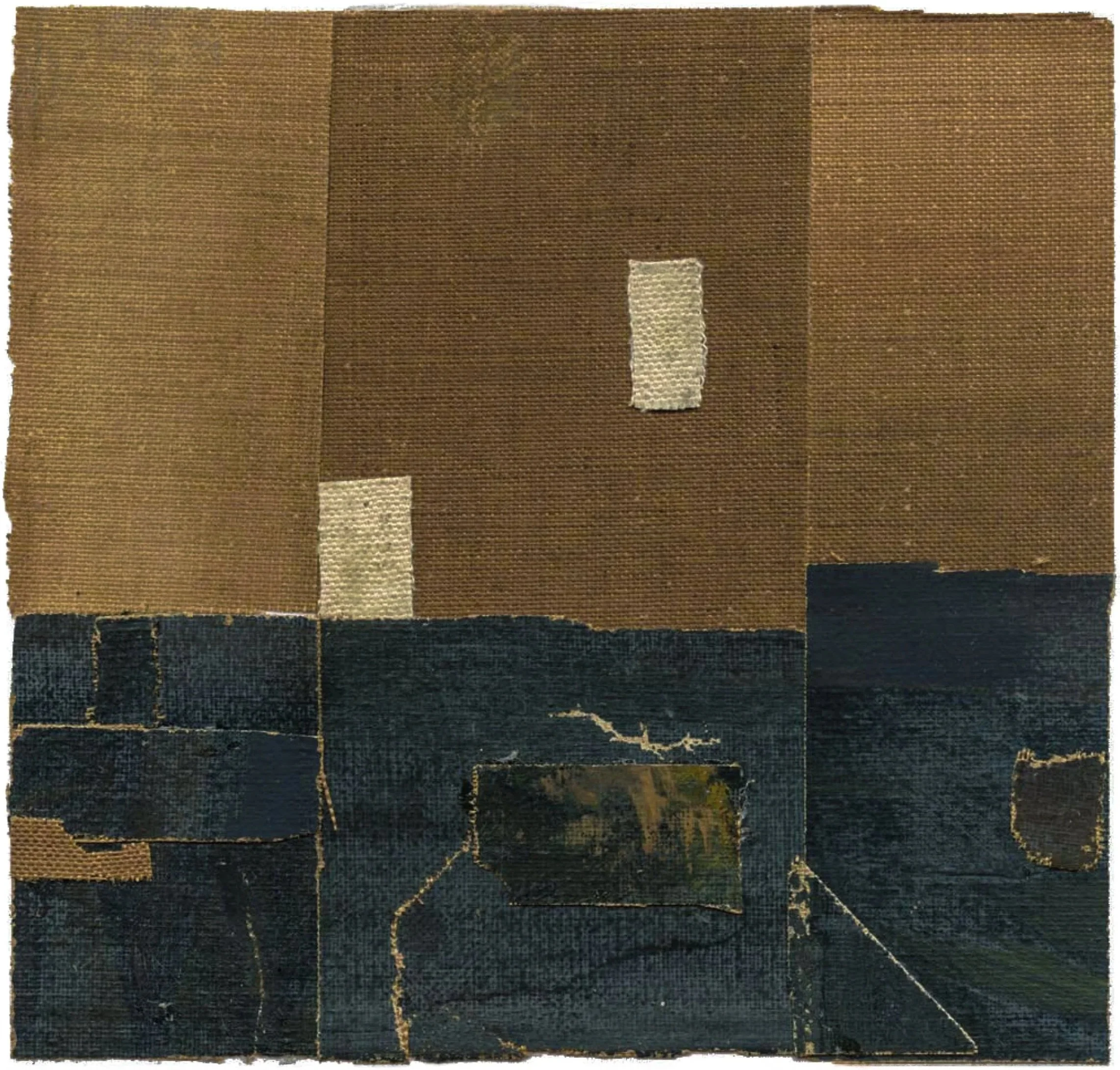
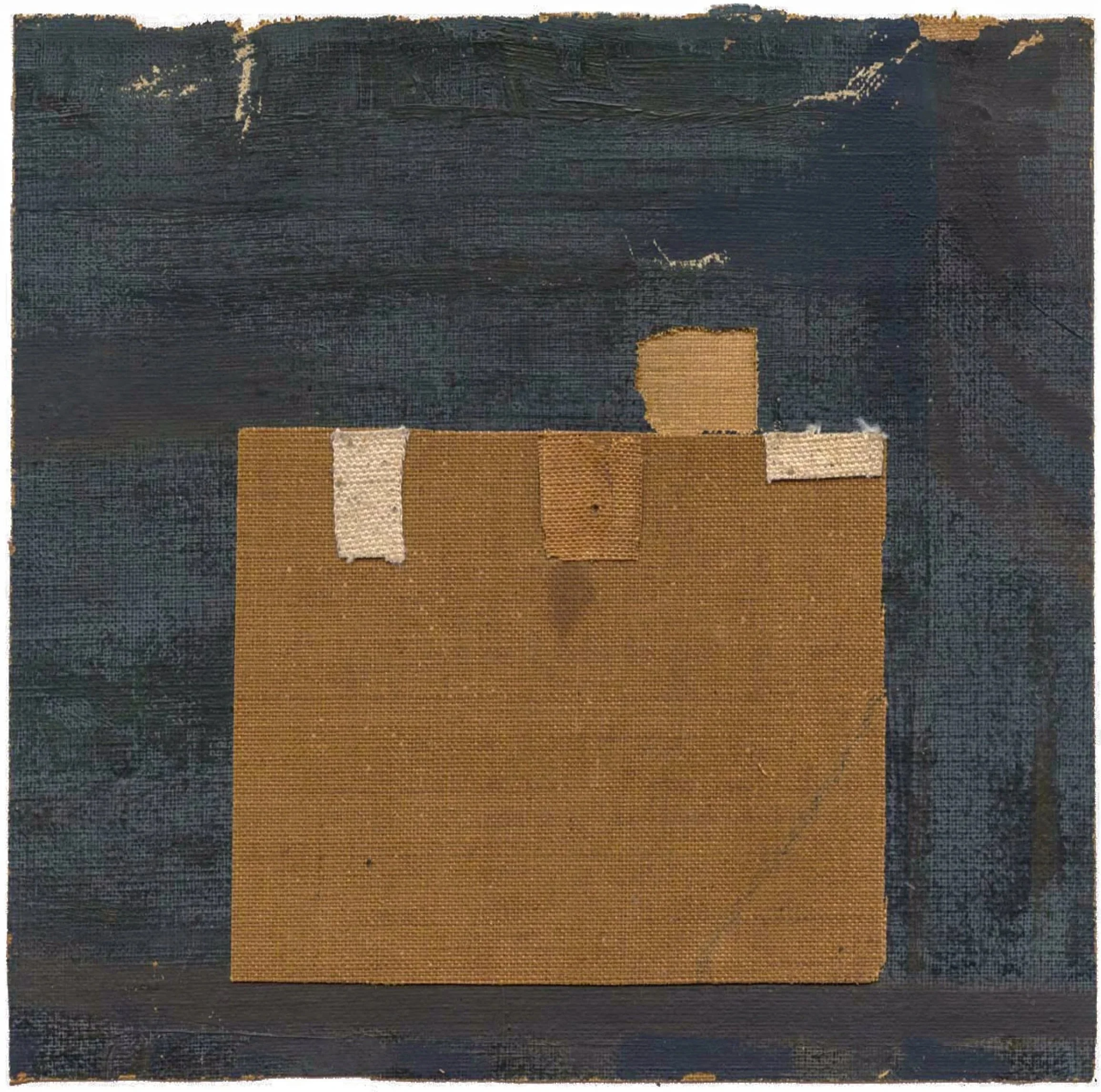
Nine more collages followed, cut from both sides of the same canvas. A novice’s painting of a standing friar became a set of modernist compositions: geometric arrangements, suggested landscapes, color fields holding the shapes of farmhouses and barns. The finished front and the raw, discolored back sit side by side, ragged edges and all, in a dialogue between old and new, naive and intentional.
Ed made the series in response to my paintings, the landscapes especially, and their somber, earthy colors. He called it “Glenn’s Vermont.” I think of it as Ed’s Vermont: his reading of what he sees as mine. The eleven collages are published together for the first time in Ed Fella: Collage.
Ed Fella: Collage is available at our Bookstore.